Interview with the chair
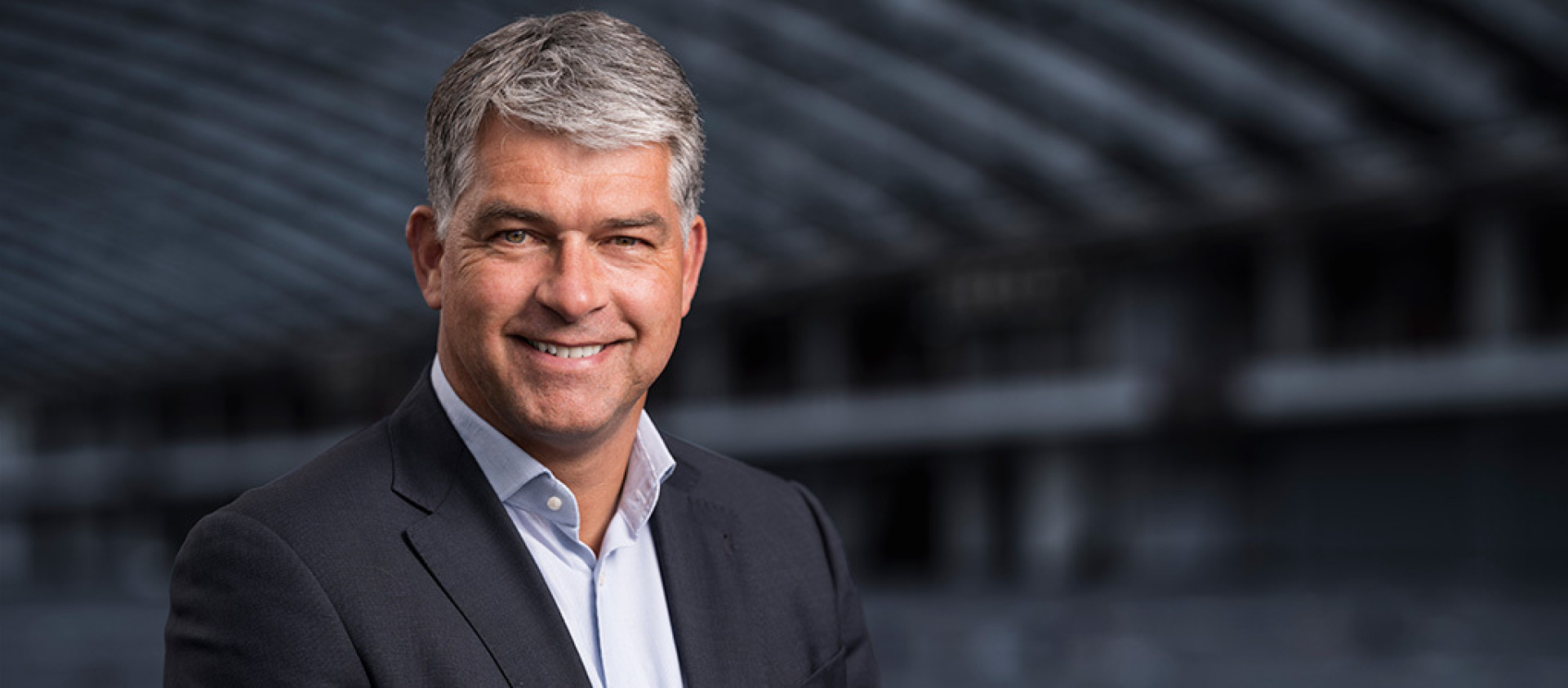
The first term of Otto Ambagtsheer is coming to an end. A good opportunity to reflect on the past and look ahead with the chair of the Supervisory Board.
What stands out most for you from the past four years?
That has to be the extremes that the organisation faced in such a short period of time. When I was asked to join as a Supervisory Board member in 2020, RAI Amsterdam had just completed a record year. Before I even started, however, the pandemic began and this crisis dominated everything for my first two years. The RAI remained closed for a long time, except for the temporary GGD testing and vaccination centre. One event cancellation after another followed. It was therefore crucial for the Supervisory Board to stay in close contact with all stakeholders, intensify its oversight and, at the same time, support the Executive Board while giving them the freedom to manage the situation.
The second period, covering the past two years, saw an incredibly fast recovery. Large events, involving hundreds of companies and thousands of visitors, cannot be rescheduled within just a few months. Yet, in some cases, the organisation managed to do just that. Despite the long lead times associated with events, we closed 2024 with the best year ever. From going back to zero, to a strong recovery, to a record-breaking year – the past four years have been an extraordinary journey.
You are also CEO of Via Outlets alongside your role at RAI. That must have been challenging when the pandemic started. Were you able to combine both roles?
Via Outlets develops and operates retail centres. These venues also attract large crowds and were temporarily closed during the pandemic. There are many parallels with RAI
Amsterdam. However, the recovery of the outlet retail sector was less complex as visitors returned immediately once shops reopened. There was no lead time required to get back in business. Looking at how RAI Amsterdam managed its recovery, I can only express great respect. The organisation worked extremely hard and the Executive Board handled the challenge exceptionally well.
In terms of combining both roles, the Supervisory Board operates differently from executive management. It provides internal oversight, acts as the employer of the Executive Board and offers advice. That said, it was a very intense period!
Has the role or approach of the Supervisory Board changed over the past four years?
Our role remains the same but, looking back, we have adjusted our approach in two areas. First, we launched the Vision 2030 steering committee, in which some Supervisory Board members are closely involved within their oversight role. Secondly, we have expanded preparations within committees, allowing Supervisory Board meetings to focus more on discussion and decision-making rather than detailed preparations
What was important for you to contribute during your first term?
Supervision is always a team effort, and its strength lies in the diversity of competencies and experiences among board members. As chair, I found it particularly important during the pandemic to keep the organisation focused on the long term. I believe we succeeded in providing the Executive and Supervisory Boards with sufficient space to do so. For example, even during the pandemic, the organisation continued developing plans for the RAI’s area development.
Looking ahead, what do you see as the key agenda item for the coming period?
My hope for 2025 is that RAI Amsterdam, together with its stakeholders, succeeds in translating the area development plans into a concrete programme that brings together the best of both worlds – that of RAI’s organisation and that of the city.The area development presents a unique opportunity to reshape the transition between the Rivierenbuurt and Zuidas neighbourhoods. The RAI site, including the approach from the station and the ring road, as well as its connection to the city centre and Beatrixpark, has the potential to contribute much more to both the neighbourhood and the city – functionally and aesthetically. At the same time, the exhibition and conference venue can be modernised and made more sustainable, ensuring it is well-equipped for its functions in the coming decades. I would like to see this programme translated into concrete plans. It is a crucial agenda item as doing so will ensure a promising future perspective for both RAI Amsterdam and its surroundings.
Supervisory Board statements
The Supervisory Board hereby presents the Annual Report of RAI Holding BV.
It was compiled by the Executive Board and includes the financial statement for 2023. Deloitte Accountants BV has checked the financial statement and provided it with an approved audit statement.
Consultations between Supervisory Board and committees
The Supervisory Board held four scheduled meetings in 2024, with a 100% attendance from all members. Recurring topics included the progress report (monitoring both financial and non-financial goals), the business update (focused on the main issues related to markets, clients and events) and the corporate annual plan. Other subjects included the strategy enrichment, Vision 2030, the shareholder structure, IT security, the real estate division and cost management. We also monitored the developments related to plans by the City of Amsterdam to build an erotic centre in the vicinity of the Convention Centre. The minutes from the committees were explained during the Supervisory Board meetings that followed and discussed where necessary or desired.
In addition to the regular Supervisory Board meetings, a separate session was held in the autumn dedicated to the strategy and future vision. As part of the area development, the Municipality of Amsterdam published a Guiding Principles Memorandum in October. The Supervisory Board discussed the area development and the related subtopics extensively with the Executive Board.
Audit committee
The audit committee, consisting of Michiel Boere (chair) and René Takens, met four times during the reporting year. The meetings were attended by the two Executive Board members and the Chief Financial Officer, with the exception of one meeting where Executive Board member Maurits van der Sluis was absent due to work abroad. Topics discussed included the 2023 annual report, the 2023 financial statements, the 2023 auditor’s report and the 2024 audit plan. Other items on the agenda were current financing arrangements, the corporate finance trajectory initiated for the future, the budget, planned investments, RAI China’s activities, the dividend payment including the dividend and eligibility test, and the budget for 2025. The audit committee also discussed developments in the area of compliance and risk management, including a meeting with the risk & compliance officer. The committee concluded that the embedding of risk management within RAI Amsterdam’s operations is adequately arranged and expressed satisfaction with the progress made in this area. Other matters addressed by the committee included the cyber risk assessment and the extension of the agreement with Deloitte for audit services.
Remuneration committee
The remuneration committee and the selection and appointment committee, both consisting of Mariëlle de Macker and Annemarie Macnack-van Gaal, met several times during the reporting year, including two meetings with the Executive Board and the HR Manager. Topics discussed included organisational development and culture, the development of the management team, the evaluation with the Executive Board members, and the remuneration policy for the Executive Board. Diversity and inclusion were also regularly on the agenda. Special attention was paid over the past year to the organisation’s employment conditions policy and pension scheme.
Vision 2030 steering group
The future vision of RAI Amsterdam is for ‘a flourishing RAI in a flourishing environment’. The 2030 Vision steering group includes representatives from both shareholders, the CEO, the financial director, RAI company secretary, and Supervisory Board members Annemarie Macnack-van Gaal (chair of the steering group) and Otto Ambagtsheer. It discusses all aspects relevant to and required for this vision. Decision making takes place within the formal governance structures, which in this case is the general meeting, Supervisory Board and Executive Board.
Presentation of annual report
The audit committee discussed the financial statement and 2024 annual report with the Executive Board and external accountants Deloitte. The Supervisory Board will propose that the shareholders confirm the financial statements and the 2024 annual report during the general meeting on 24 April 2025. The Supervisory Board proposes that the financial statements be confirmed, that the Executive Board be given discharge for its management and that the Supervisory Board be given discharge for its supervision.
Amsterdam, 28 March 2025
Supervisory Board of RAI Holding BV
O. (Otto) Ambagtsheer, chair
A.M.H. (Annemarie) Macnack-van Gaal, vice-chair
M.P. (Michiel) Boere
W.C.M. (Mariëlle) de Macker
R.J. (René) Takens